
Skip to content
Choose your language:
  • There are no suggestions because the search field is empty.
Take Your Free
Assessment

Figure out if you qualify...

Take The Free Immigration Assessment

Meet with one of our immigration consultants

Book An Appointment

    CANADIAN CITIZENSHIP AFTER PR

    Your Canadian Citizenship Application Starts With CanDo Immigration

    Already a permanent resident (PR)? Learn when you become eligible for Canadian citizenship after PR, how CanDo's regulated consultants confirm your eligibility, and how we help you prepare a complete application for the Canadian government.

    2025 winner badgeCanDo Platinum Badge

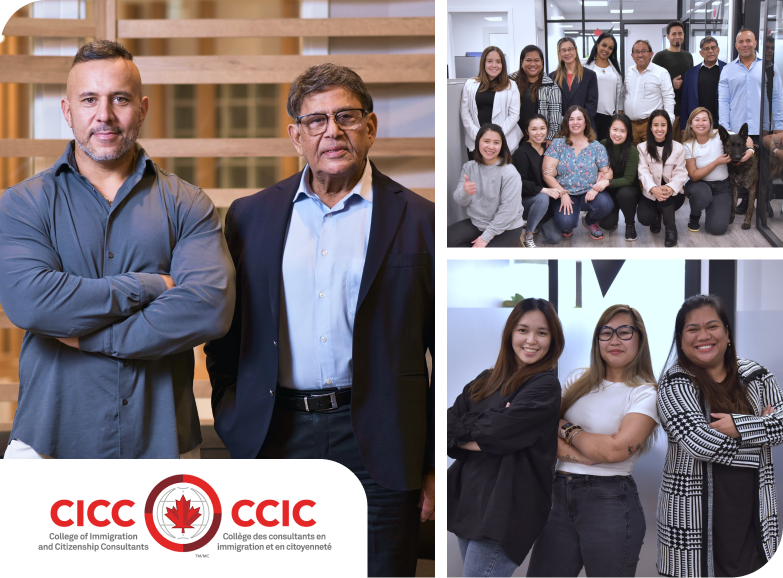
    Regulated Canadian Immigration Consultants (RCIC-IRB)

    Proudly regulated by and in good standing with the College of Immigration and Citizenship Consultants (CICC). Jamie Dowla, registration #: R507233.
    Regulated-Canadian-Immigration-Consultants-section-image-v3

    From Permanent Resident to Canadian Citizen

    Becoming a permanent resident was the first step. Canadian citizenship is the next one.

    Canadian citizenship for permanent residents comes with the full rights of a Canadian citizen: voting in federal, provincial, and municipal elections, holding jobs that require high-level security clearance, and, for most citizens, dual citizenship if their country of origin allows it.

    CanDo Immigration's regulated Canadian immigration consultants review your immigration history against the rules, determine the earliest date you can apply, and prepare your Canadian citizenship application from start to finish.

    LEARN MORE ABOUT CANADIAN CITIZENSHIP

    From Permanent Resident to Canadian Citizen-image

    How Long After Getting PR Can You Apply for Citizenship?

    You do not become eligible the moment your PR is approved. Immigration, Refugees and Citizenship Canada (IRCC) sets specific rules for how much time you need to spend in Canada, what else you need to have done as a permanent resident, and what could disqualify you. 

    Physical Presence

    The core rule for moving from PR to Canadian citizenship is physical presence. You need to have been physically present in Canada for at least 1,095 days during the five years immediately before the date you sign your application. Those 1,095 days do not need to be continuous, and they do not all need to fall after you became a permanent resident.

    What counts toward your 1,095 days:

    • Every full day you were physically present in Canada as a permanent resident counts as one day.
    • Time spent in Canada as a temporary resident or protected person before you became a permanent resident counts too, at a rate of half a day for each day present, up to a maximum of 365 days. A protected person includes someone granted refugee protection, including through a positive pre-removal risk assessment.
    • Days spent outside Canada while working as a Crown servant, or as the spouse, common-law partner, or child of a Crown servant, count as full days.

    What does not count:

    • Time spent serving a sentence in prison, on parole, or on probation in Canada.
    • Time spent waiting for a decision on a refugee claim, before you had protected person or permanent resident status.
    • Any day you were not lawfully present in Canada or authorized to be there.
    • The Government of Canada's online physical presence calculator, built into your IRCC account, automatically calculates your eligibility date once you enter your travel history.

    CanDo can review your travel history with you so there are no surprises when it's time to apply for citizenship.

    Income tax filing

    If you are required to file Canadian income taxes, you must have filed for at least three of the five years immediately before you apply, in line with the Income Tax Act. CanDo can help you confirm whether this applies to your situation before you submit anything.

    Language skills

    If you are between 18 and 54 years old, you need to show proof that you can speak and understand English or French at Canadian Language Benchmark (CLB) 4 or higher. Accepted language proof includes results from an approved third-party test, evidence of study in English or French, or your Canadian Language Benchmark or Niveaux de compétence linguistique canadiens assessment.


    The citizenship test

    Applicants aged 18 to 54 also need to pass the Canadian citizenship test, which covers Canada's history, values, institutions, and symbols, as well as the rights and responsibilities of citizenship. A citizenship official reviews your application and supporting documents and may request an interview or additional proof before you're invited to write the test.

    The oath and ceremony

    Once your application is approved, adult applicants take the Oath of Citizenship at a citizenship ceremony. After the ceremony, you receive your citizenship certificate and, from that point, you're eligible to apply for a Canadian passport and to vote in Canadian elections.

    Situations That Can Affect Your Eligibility

    Not everyone who meets the physical presence requirement is automatically eligible to apply. IRCC rules also screen out applicants for immigration or fraud reasons, including if you:
    • Are under a removal order or have unfulfilled conditions related to your permanent resident status.
    • Are serving a sentence, on parole, or on probation, in or outside Canada.
    • Are charged with, on trial for, or were convicted of an indictable offence in Canada, or an equivalent offence outside Canada, within the past four years.
    • Are under investigation for, charged with, or were convicted of a war crime or a crime against humanity.
    • Had a previous citizenship application refused for misrepresentation within the past five years, or had your Canadian citizenship revoked for fraud within the past ten years.

    CanDo's consultants review your file for any of these issues before you apply, so you know exactly where you stand.

    Situations That Can Affect Your Eligibility-image

    The Canadian Citizenship Application Process

    CanDo Immigration will guide you through how to apply for Canadian citizenship after PR to ensure a successful outcome.

    01

    Confirm your eligibility. 

    Calculate your physical presence, confirm your tax filing history, and check for any of the situations above that could affect your application.

    02

    Gather your documents. 

    This includes proof of PR status, language proof (if required), and supporting identity documents.

    03

    Submit your application. 

    Most applicants apply online, though a paper application is available for some circumstances.

    04

    IRCC review. 

    A citizenship official reviews your file and may request more information, a language or knowledge test, or an interview.

    05

    Test and ceremony. 

    Eligible applicants aged 18 to 54 write the citizenship test, then attend a citizenship ceremony to take the Oath of Citizenship.

    06

    Certificate. 

    You receive your Canadian citizenship certificate, the proof you need to apply for a Canadian passport.

    CanDo Immigration supports you at every one of these steps, from the first eligibility review through your ceremony.

    Testimonials

    Success Stories, Told by Those Who've Experienced It

    explore

    Learn About All of the Great Things
    Canada Has to Offer!

    why us

    Why Permanent Residents Choose CanDo for Their Citizenship Application

    For over 35 years, CanDo Immigration has helped permanent residents take the final step in their immigration journey: becoming a Canadian citizen. 

    Our approach is grounded in excellence, honesty, passion, and respect, values that matter when you're relying on us to get your physical presence calculation right, catch anything that could affect your eligibility, and guide you through to your citizenship ceremony.

    35+ Years Reviewing Immigration and Citizenship Files

    For over three decades, CanDo Immigration has helped permanent residents confirm their eligibility and prepare complete applications as they take the next step toward Canadian citizenship.

    We Calculate Your Physical Presence With You

    Rather than leaving you to work out the 1,095-day rule on your own, our consultants walk you through your travel and residency history and confirm the earliest date you're eligible to apply.

    We Flag Issues Before IRCC Does

    If unfulfilled conditions, an old removal order, or a gap in your tax filing could affect your application, we identify it during your assessment, not after you've already submitted.

    Support From Application to Ceremony

    We stay involved after you submit your application, helping you respond to IRCC requests and prepare for your citizenship test and ceremony.

    BLOGS

    Canadian Immigration News, Tips, and Resources

    Group of Smiling Working Full Time Student in Canada
    Dec 18, 2025

    Can International Students Work Full Time in Canada? Understanding the Rules for Off-Campus Work

    Studying in Canada opens doors to world-class education, exciting career opportunities, and a vibrant multicultural experience. For many international students, working while studying is a crucial

    read more
    smilig student holding the Canada Flag
    Nov 21, 2025

    How to Get Permanent Residency in Canada After Study: Pathways for International Graduates

    For many international students, studying in Canada is the first step toward building a life in one of the most welcoming and diverse countries in the world. From high-quality education to strong job

    read more

    Workers wearing hard hats, chatting to each other while working in a Canadian factory.
    Aug 6, 2025

    What is LMIA in Canada: An Overview for Canadian Employers

    If you're a Canadian employer planning to hire a foreign worker, you'll need to navigate the Labour Market Impact Assessment (LMIA) process. This crucial step helps ensure that hiring a foreign

    read more

    View More Blog Posts
    LOCATIONS

    Find Your Dedicated Immigration Consultant Wherever You Are 

    We assist clients worldwide with their applications. See the cities below to find your regulated Canadian immigration consultant.

    Frequently Asked Questions

    How long after getting PR can I apply for Canadian citizenship?

    There's no fixed waiting period tied to your PR approval date. What matters is physical presence: you need at least 1,095 days physically present in Canada during the five years immediately before you apply, plus at least 730 of those days as a permanent resident. Time spent in Canada before you had PR status, as a temporary resident or protected person, can also count toward the total at a half-day rate. CanDo can calculate your specific eligibility date based on your travel and immigration history.

    How is physical presence calculated for a citizenship application?

    IRCC counts every full day you were physically present in Canada as a permanent resident, plus half a day for each day you were present as a temporary resident or protected person before that, up to a maximum credit of 365 days. Time in prison, on parole, on probation, or spent waiting on a refugee claim decision does not count. The Government of Canada's online physical presence calculator applies these rules automatically, and CanDo reviews your history with you before you rely on it.

    Does time as a temporary resident or protected person count toward citizenship eligibility?

    Yes, up to a point. Days spent in Canada as a temporary resident (such as on a study or work permit) or as a protected person before you became a permanent resident count as half a day for each day present, capped at 365 days total. Days after you became a permanent resident count in full.

    Do I need to file taxes before applying for citizenship?

    If you're required to file Canadian income taxes, you need to have filed for at least three of the five years immediately before your application, in accordance with the Income Tax Act. A citizenship official can request confirmation of your tax filing during processing, so it's worth confirming your filing history before you apply.

    What could make me ineligible to apply for citizenship?

    A few situations can affect your eligibility, including:

    • an active removal order 
    • unfulfilled conditions on your permanent resident status 
    • a criminal charge or conviction within the past four years 
    • ďan investigation or conviction for a war crime or crime against humanity
    • a citizenship application refused for misrepresentation within the past five years. 

    CanDo reviews your file for these issues as part of your eligibility assessment.

    Can I apply for citizenship if my PR card has expired?

    Yes. An expired PR card does not affect your eligibility for PR-to-citizenship in Canada. What matters is that you still hold a valid PR status, with no removal order or unfulfilled conditions attached.

    Does my child need to meet the same requirements to get citizenship after PR?

    Not exactly. A child permanent resident is exempt from the language proof and citizenship test. Whether they need to meet the physical presence requirement depends on your own citizenship status. If you already hold citizenship, or you're applying for it at the same time as your child, your child does not need to meet the physical presence or income tax filing requirements either. If neither parent is a citizen or is applying alongside them, your child needs the same 1,095 days of physical presence and, if applicable, tax filing that an adult applicant does. A parent or legal guardian signs the application on the child's behalf, and children aged 14 or older also sign and take the Oath of Citizenship themselves.

    Does marrying a Canadian citizen or permanent resident speed up my citizenship application?

    No. Marrying a Canadian citizen doesn't give you citizenship, and it doesn't change any of the requirements on this page. If you're a permanent resident married to a Canadian citizen, you still need your own 1,095 days of physical presence, your own tax filing history if required, and to meet the language and citizenship test requirements on your own. Marriage can support a permanent residence sponsorship application if you don't already have PR status, but it has no effect on your citizenship timeline once you do.